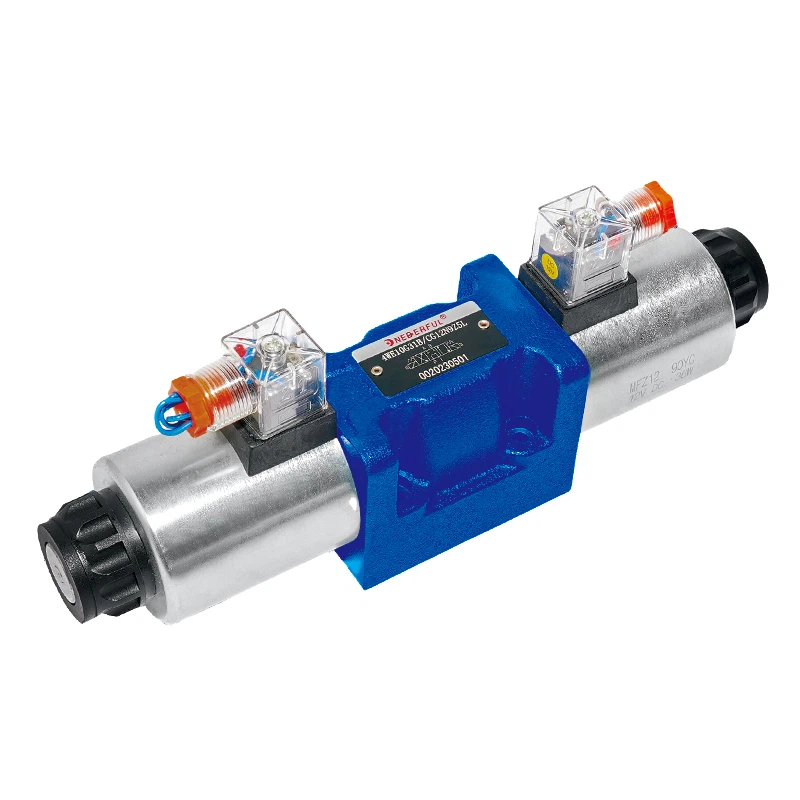
Hydraulic directional control valves are often compared to other types of directional control valves, such as check valves and shuttle valves. Check valves only allow unidirectional flow of oil and cannot perform directional switching; therefore, directional control valves are more suitable for systems requiring bidirectional control. Shuttle valves are valves that automatically select high-pressure oil paths and are often used in logic control, but they lack active directional switching capability.
Compared to electric or pneumatic directional control valves, hydraulic directional control valves offer advantages in high power density and reliability. Hydraulic systems can transmit larger forces and torques, making them suitable for heavy machinery and high-load applications. Electric directional control valves are typically used in low-power systems, offering fast response but limited load capacity; pneumatic directional control valves are suitable for light loads and high-speed applications, but their accuracy and stability are inferior to hydraulic systems due to the compressibility of air.
In terms of cost, the initial investment in hydraulic directional control valves may be higher, but due to their durability and long lifespan, maintenance costs are lower over long-term use. For example, the solenoid of an electromagnetic directional control valve may require periodic replacement, but the valve body can typically last for many years. In contrast, the motors and electronic components of electric directional valves may be more prone to damage and require more frequent maintenance.