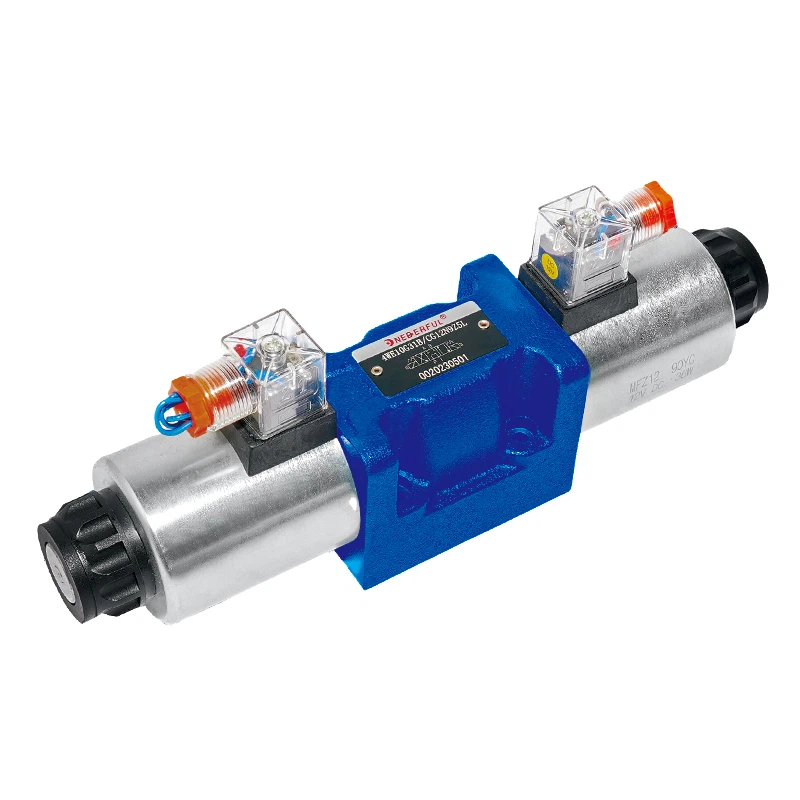
A hydraulic gear pump is a common hydraulic power component. Its core function is to convert the mechanical energy of an electric motor or prime mover into hydraulic energy, providing pressurized oil to the hydraulic system. The following are its basic characteristics:
Working Principle
A hydraulic gear pump relies on a pair of meshing gears rotating within the pump body. Oil suction and discharge are achieved through the periodic change of the working volume:
Suction Process: When the gears disengage, the volume of the suction chamber increases, creating a partial vacuum. Under atmospheric pressure, oil is drawn from the tank and fills the gear teeth.
Discharge Process: As the gears continue to rotate, the oil in the gear teeth is carried to the discharge chamber. When the gears re-mesh, the volume decreases, the oil is squeezed, and thus discharged at a certain pressure.
Isolation Function: The suction chamber and discharge chamber are separated by the gear meshing line, ensuring unidirectional oil flow. The pump's outlet pressure depends entirely on the system resistance.
Core Structural Features
Basic Components: Primarily includes a driving gear, driven gear, pump body, front and rear end covers, drive shaft, and bearings. Some high-end models employ floating bushings and DU self-lubricating bearings to enhance performance.
Sealing Method: Sealing is achieved through minute gaps between the gears and the pump body wall and end covers, based on the gap sealing principle. There are no suction or discharge valves.
Structural Types:
External Gear Pump: The simplest in structure and most widely used, but suffers from radial force imbalance and large flow pulsation.
Internal Gear Pump: More compact in structure, with smaller flow pulsation and lower noise, but requires high manufacturing precision and is often used in space- and noise-sensitive applications (such as the NBZ gear pump).