Manual Directional Control Valve: The valve core is directly actuated by a manual lever. It comes in two types: spring-loaded automatic return and spring-ball positioning.
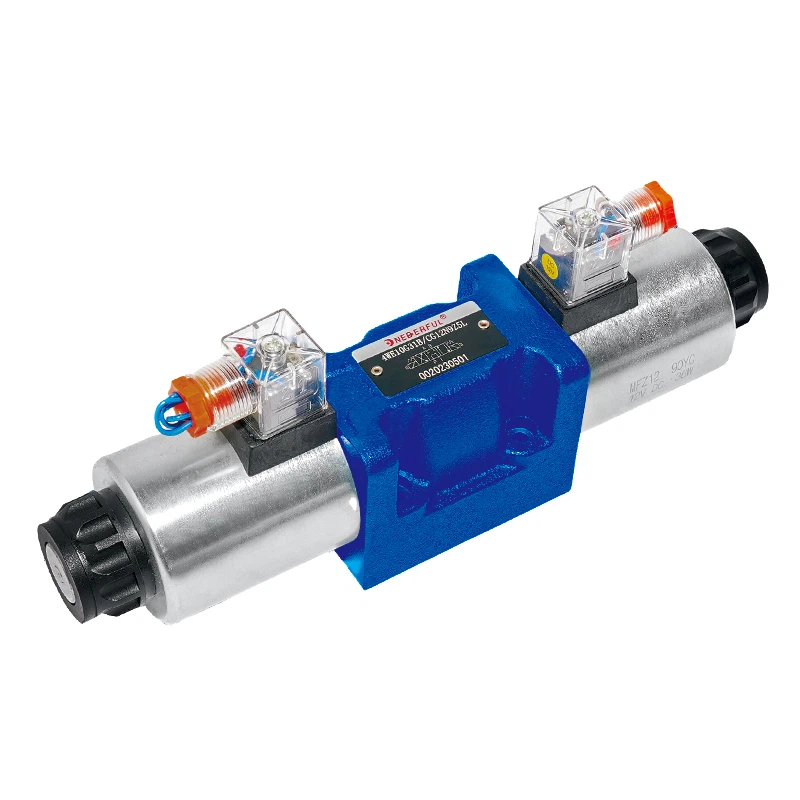
Solenoid Directional Control Valve: The valve core is driven by an electromagnet. When energized, the electromagnetic force overcomes the spring force, causing the valve core to move. When de-energized, the spring returns to its original position. It serves as a signal conversion element between the electrical and hydraulic systems.
Hydraulic Directional Control Valve: The valve core is driven by pressurized oil in the control circuit. Reversing is achieved by the pressure difference between the two sealed chambers. Suitable for high-flow-rate systems.
Electro-hydraulic Directional Control Valve: A small solenoid valve acts as a pilot control, driving a large hydraulic spool valve to achieve precise control of high-flow-rate, high-pressure oil circuits.
Neutral Position Function Design: When the valve core of a three-position directional control valve is in the middle position, the connection state of each port is called the "neutral position function." Common types include "O," "H," "P," "K," and "M" types. Different center position functions can achieve various purposes such as system pressure holding, unloading, smooth reversing, or floating actuators, serving as an important selection criterion for system design.
Anti-hydraulic jamming design: To prevent "hydraulic jamming" caused by geometric errors between the valve core and valve orifice, radial unbalanced hydraulic pressure, or impurities, annular pressure equalizing grooves are often created on the valve core surface to balance radial forces; simultaneously, strict control of machining accuracy and assembly concentricity ensures flexible valve core movement.
Multiple operating modes: The structure supports multiple drive methods, including manual, mechanical (stroke valve), electromagnetic, hydraulic, and electro-hydraulic combined drives, adapting to industrial scenarios with varying degrees of automation and power requirements.