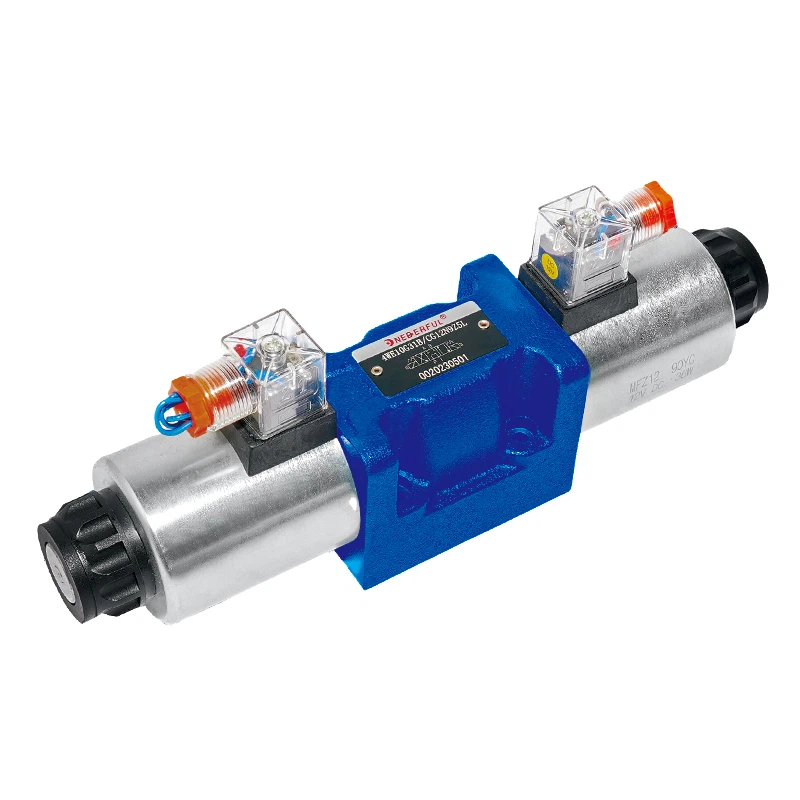
A hydraulic directional control valve is a key component used to control the flow direction of hydraulic fluid in a hydraulic system. Its structural design directly affects its directional control performance, sealing performance, and reliability. Based on its working principle and application scenarios, it mainly has the following structural features:
Core Components: Primarily composed of the valve body, valve core (or spindle), valve stem, hydraulic manifold, and end caps. The valve core moves axially within the valve body, changing the connection between the oil ports to connect, disconnect, or reverse the oil flow. The machining accuracy of the hydraulic manifold directly determines the valve's flow control function and overall performance.
Sealing and Leakage Prevention Design: Employing a cone valve-type zero-leakage design, it optimizes the sealing structure between the valve core and valve sleeve to form a line seal. Utilizing the axial force generated by the hydraulic oil and the spring force in synergy, it effectively reduces internal leakage, improving system reliability and response speed.
Integrated Design: Modern hydraulic directional valves often employ an integrated structure, combining functional modules such as filters, pressure regulating valves, and safety valves onto a single oil collection block. This plate-mounted design significantly reduces the system's footprint, simplifies piping connections, and improves system compactness and ease of maintenance.