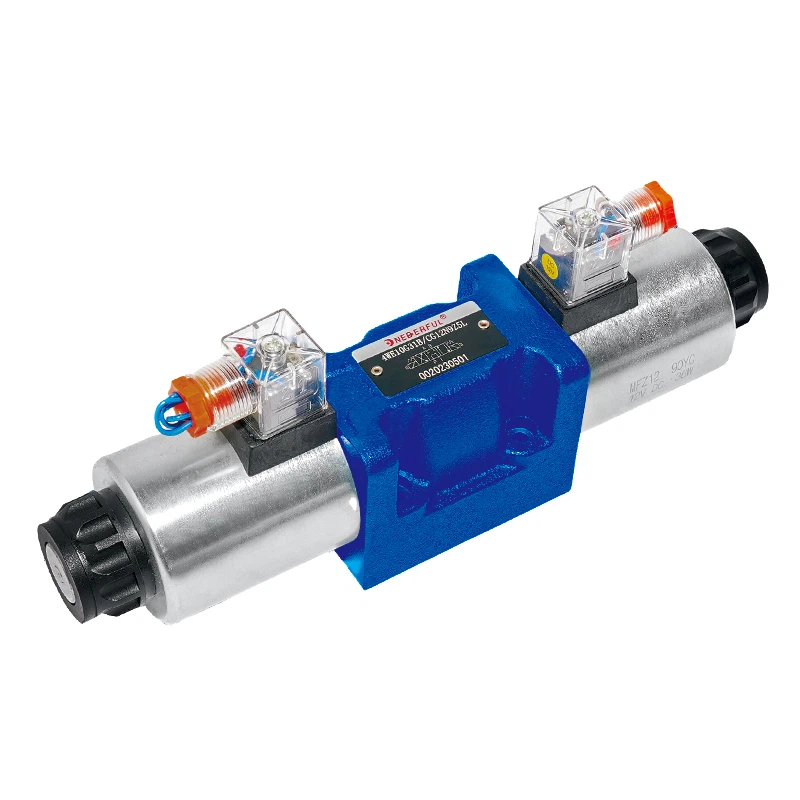
A hydraulic directional control valve is a hydraulic control element whose main function is to control the flow direction of oil in a hydraulic system, thereby achieving precise control over the movement of actuators (such as hydraulic cylinders or hydraulic motors).
Specifically, the hydraulic directional control valve connects, disconnects, or changes the connection relationship of the oil circuit through the relative movement of the valve core within the valve body, achieving the following core functions:
Controlling the start and stop of actuators: By connecting or disconnecting the pressure oil circuit, the actuator can start or stop its movement.
Changing the direction of actuator movement: By changing the direction of the oil flow, the extension or retraction of the hydraulic cylinder piston, or the forward and reverse rotation of the hydraulic motor can be controlled.
Achieving system pressure holding, unloading, and floating:Different types of directional control valves (especially three-position valves) have different connection methods for each port in the neutral position (called neutral position function), which can achieve functions such as system pressure holding (P port blocked), unloading (P port connected to T port), or making the hydraulic cylinder float (both A and B ports connected to T port). Depending on the actuation method, hydraulic directional valves can be classified into various types, including manual, motorized, electromagnetic, hydraulic, and electro-hydraulic. However, their core function is to control the hydraulic system by controlling the direction of oil flow.