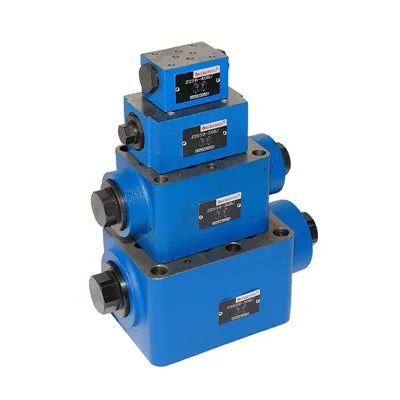
Shijiazhuang Laiye Import& Export Trading Co., Ltd. is one of the leading manufacturers and suppliers of p40 series compact monoblock directional control valve in China, also supports customized service. If you're going to wholesale high quality p40 series compact monoblock directional control valve made in China, welcome to get pricelist from our factory.

When a Single-Body Casting Is the Better Choice
In compact machinery like mini-excavators, skid steers, or tractor loaders, the hydraulic functions are usually fixed from the start. You don't need the flexibility of adding or removing sections later. For this kind of equipment, a single-piece cast iron body makes more sense than a stacked sectional valve. There are no tie rods to tighten, and no O-ring interfaces between sections that can leak over time. The flow passages and spool bores are all machined into one solid casting.
The difference becomes noticeable the first time you run the machine. A monoblock body is more rigid than a stacked valve. When the machine is working on uneven ground, the shock loads that can shift a stacked valve have less effect on spool alignment here. The levers have a solid stop at each end of travel, and the response is predictable right from the start.
The P40 series compact monoblock directional control valve is rated for 250 bar maximum pressure and 40 L/min rated flow, which covers the range typically found on auxiliary circuits in compact equipment. It is available with 1 to 7 sections, so you can match the configuration to the number of functions your machine needs. The pressure, tank return, and work ports are all G1/2 threads, and the pilot connection is G1/4-standard sizes that make sourcing fittings and hoses straightforward.
Control Options and Internal Function
The P40 series is controlled by manual levers. When the operator pushes or pulls a lever, the spool shifts and directs pressurized oil from the P port to the A or B work port. Releasing the lever allows a spring to return the spool to neutral, stopping the cylinder. The lever layout follows the standard pattern used on most mobile machinery, so operators can pick it up without needing to adjust to a new control arrangement.
Internally, the valve follows a common open-center configuration. Oil enters through the P port and flows through the valve. When a lever is actuated, the spool routes oil to the appropriate work port, and the excess returns to the tank through the T port. An internal relief valve is also built into the circuit to protect the system from overpressure.
The P40 series is available with different spool functions to match the circuit design. The spool function determines the neutral position of the valve and what happens to the oil when the lever is released. Choosing the correct function is important for ensuring that the cylinder behaves as expected when the operator is not actively controlling it.

| Parameter | Specification |
|---|---|
| Structure Type | Monoblock Valve |
| Sections | 1 to 7 Sections |
| Max. Pressure | 250 bar (3600 psi) |
| Rated Flow | 40 L/min (10.5 US gpm) |
| Operating Viscosity Range | 15 - 75 mm²/s (15 - 75 cSt) |
| Ambient Temperature Range | -40°C to +80°C (-40°F to +176°F) |
| Port Threads | P/T: G1/2; A/B: G1/2; Pilot: G1/4 |
Why Choose Us
We have been manufacturing hydraulic components for mobile and industrial machinery since 1988. The P40 series compact monoblock directional control valve is designed, machined, assembled, and tested in our own facility-from the casting stage to the final bench test. This means you are not ordering through a distributor. When you have a question about spool functions, port configurations, or circuit integration, you are speaking directly to the people who build the valve.
We work regularly with OEM customers who need specific spool functions, custom lever handles, or alternative port thread standards. If your machine requires a configuration that is not listed in our catalog, we can evaluate your drawing or schematic and verify the compatibility before production begins. Custom orders are a normal part of our workflow, not an exception.
Our facility is equipped with CNC machining centers, automated casting lines, and hydraulic test benches. We control the entire production process-from casting and machining to assembly and final testing-within our own shop. This gives us control over the quality and consistency of every valve that leaves the factory.
Every assembled valve is tested on a hydraulic test bench before shipping. We run pressure tests up to 250 bar to check for leaks at the port faces and the valve body. We also test the lever operation to ensure that the spools shift smoothly and return to neutral reliably. Valves that do not pass these tests are reworked before they leave the shop.
We export the P40 series to customers in Russia, Europe, the Middle East, South America, and Asia. We provide all necessary export documentation, and our engineering team is available by email or phone to assist with installation, troubleshooting, and system integration. We work with international couriers and shipping agents to ensure reliable delivery to any destination.

Production Quality
We inspect all raw castings and steel bar stock for surface defects and dimensional accuracy before machining. Castings with porosity or cracks are rejected at this stage to prevent wasted machining time on bad material.
During the machining stage, the spool bores, port faces, and mounting surfaces are measured at multiple points. If a part falls outside the specified tolerance, it is pulled from the line and reworked or discarded.
Each spool is matched to its bore during sizing. The clearance between them is measured manually. If the clearance is too wide, internal leakage will increase. If it is too tight, the lever will be difficult to move.
The springs used in the valve are tested for force consistency before they are installed. Springs that do not meet the required force specification are rejected.
After assembly, every valve is pressurized to 250 bar on a hydraulic test bench. This test confirms that the body, the port faces, and the seals hold pressure without leakage. We also run the levers through the full range of travel to confirm that each spool shifts smoothly and returns to neutral without sticking.
Before packing, we check the labeling, port protection, and surface finish. Only valves that pass all steps are released for shipment.

Factory Production Technology
Monoblock casting and body preparation
The P40 series begins as a monoblock iron casting. Unlike sectional valves that rely on separate machined bodies bolted together, the P40 body is cast as a single piece. This casting process requires precise control of the mold temperature and cooling rate to prevent porosity and internal stress. We use a dedicated casting line with automated temperature monitoring to maintain consistency across production runs. Each casting is visually inspected and subjected to nondestructive testing before it moves to the machining stage.
CNC machining of the valve body
Once the casting is approved, it is transferred to our CNC machining centers. The port faces, mounting surfaces, and spool bores are machined in a single setup to ensure alignment between the flow passages and the spool bores. Multiple spool bores are machined in a single pass to maintain consistent spacing and depth across all sections. The machining process is programmed with dimensional tolerances that are tighter than the industry standard for valves of this class.
Spool grinding and fitment
The spools are machined from hardened steel bar stock. They are ground to a surface finish that allows smooth movement while maintaining a tight seal with the bore. Each spool is matched to its corresponding bore during the sizing stage. This is done manually to ensure that the clearance between the spool and the bore falls within the specified tolerance band. Spools that do not meet the fitment criteria are set aside rather than forced into assembly.

Spring selection and testing
The springs used in the P40 series are selected from suppliers that test each batch for force consistency and fatigue resistance. Before assembly, each spring is checked to confirm that its force output falls within the specified range. Springs that deviate from the specification are rejected.
Phosphating surface treatment
After machining, the valve bodies are processed through a phosphating bath. This treatment applies a corrosion-resistant conversion coating to the steel surfaces. The coating is inspected for coverage and uniformity after the treatment.
Final assembly and bench testing
The machined bodies, ground spools, tested springs, and other components are assembled in a dedicated clean assembly area. Every assembled valve is tested on a hydraulic test bench before it is shipped. The valve is pressurized to 250 bar to confirm that the body and seals hold pressure without external leakage. The lever operation is also tested to ensure that the spools shift smoothly and return to neutral reliably.
How to Order
When placing an order for the P40 series compact monoblock directional control valve, please provide the following details:
Number of sections: Choose from 1 to 7 sections. This should match the number of hydraulic functions you need to control.
Spool function: Select the spool function that matches your circuit diagram.
Lever style: Standard lever handles are available. Custom levers can be arranged for OEM orders.
Port threads: Standard ports are G1/2 (P/T/A/B) and G1/4 (pilot). Let us know if you need a different standard.
Once the configuration is confirmed, standard orders typically ship within 2 to 3 weeks. Custom orders are coordinated during the quotation stage. Installation manuals and export documentation are included with every shipment.
FAQ
Q: What is the main difference between a monoblock valve and a sectional valve?
A: A monoblock valve is cast as a single piece of metal. A sectional valve is assembled from multiple individual sections bolted together with tie rods. A monoblock valve has no internal seals between sections, which means lower internal leakage and a more rigid body. Sectional valves are more flexible if the number of functions needs to change over time.
Q: What are the port sizes on the P40 series?
A: The P40 series uses standard port threads that are compatible with common hydraulic fittings. For the specific thread sizes, please refer to the Technical Specifications table. If you require a different thread standard, please contact our sales team to discuss custom options.
Q: What is the expected lifespan of the valve spools?
A: With clean oil and normal operating conditions, the valve spools are expected to maintain their function for the service life of the machine under typical usage.
Q: What should I do if the valve spool feels stiff or hard to move?
A: A stiff spool is often caused by contamination in the hydraulic oil. Over time, fine particles can lodge in the clearance between the spool and the bore, increasing friction. The first step is to check the oil filter and replace it if it is clogged. If the oil is contaminated, we recommend flushing the circuit and replacing the oil. If the spool is still stiff after the oil is cleaned, the valve may need to be removed and inspected.
Q: How does the P40 series handle quick lever movements?
A: The spools in the P40 series are designed to shift quickly when the lever is moved. The spring return mechanism brings the spool back to neutral without delay. However, quick lever movements can cause pressure spikes in the system. The internal relief valve protects the circuit from these spikes.
Q: How do I know if the internal relief valve is working correctly?
A: The internal relief valve is set at the factory and does not require adjustment. You can verify its function by observing the system pressure when the valve is under load. If the pressure exceeds the set point and the relief valve does not open, the circuit may have a blockage. If the pressure drops below the set point and the valve opens prematurely, the relief valve may need to be inspected.
Hot Tags: p40 series compact monoblock directional control valve, China p40 series compact monoblock directional control valve, manufacturers, suppliers, factory, direction flow control valve, directional control valve in hydraulic, hydraulic dcv valve, hydraulic pilot operated directional control valve, pilot operated directional control valve, sectional valve