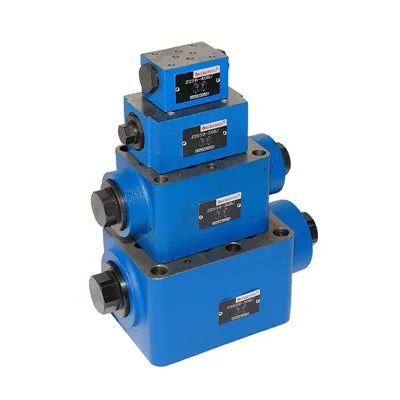
Shijiazhuang Laiye Import& Export Trading Co., Ltd. is one of the leading manufacturers and suppliers of dcv200 hydraulic directional control valve in China, also supports customized service. If you're going to wholesale high quality dcv200 hydraulic directional control valve made in China, welcome to get pricelist from our factory.
Products Description

Basic Information
The DCV200 hydraulic directional control valve is a high-flow, sectional directional control valve featuring a rated flow of 200 L/min and a maximum working pressure of 350 bar. It is configurable with 1 to 12 sections, operates within a temperature range of -40°C to 80°C, and is suitable for hydraulic fluids with a viscosity of 15–75 mm²/s. The valve body is cast from special graphite cast iron, offering large internal flow passages and low pressure drop; the spools are made of high-strength, nickel-plated steel, ensuring excellent wear resistance and interchangeability.
Product Advantages
Control options include manual, hydraulic, pneumatic, electric, and electro-hydraulic actuation. Each section can be equipped with overload valves and anti-cavitation (makeup) valves to provide additional system protection. The sectional design allows for flexible configuration and easy future expansion by simply adding sections without replacing the entire valve; individual sections can be serviced or replaced independently without disrupting the operation of other sections.
Application
The DCV200 hydraulic directional control valve is widely used in equipment such as mining dump trucks, large drilling rigs, cranes, heavy-duty loaders, sanitation vehicles, and large-scale agricultural machinery. Its high flow rate of 200 L/min makes it particularly suitable for large hydraulic systems that require the simultaneous operation of multiple high-flow actuators, such as those found in heavy-duty applications like mining, large-scale infrastructure construction, and port cargo handling.
product parameters
| Item | Parameters | |
| Nominal flow rate | 200L/min | |
| Max pressure | 350 bar | |
| Operating range | 15~75mm2/s | |
| Ambient temperature range | -40℃~80℃ | |
| Structure |
1~12 sections |
|
Production Process
1. In-house Manufacturing and Full-Chain Control
The company operates its own manufacturing facilities, handling the entire production chain-from precision casting, machining, heat treatment, and surface finishing to final assembly and testing-without relying on external contractors. We maintain full control over the entire process, from raw material intake to finished product dispatch, ensuring consistent quality.
2. Advanced Machining Equipment
Equipped with high-precision machining centers, CNC lathes, and specialized testing equipment, we utilize CNC technology for critical processes. This ensures high dimensional accuracy for valve body flow channels and consistent tolerances for valve core fit.
3. Precision Casting and Heat Treatment
Valve bodies are produced via precision casting using high-strength ductile iron, resulting in a dense, defect-free microstructure. Valve cores undergo heat treatments such as carburizing and quenching, enhancing wear resistance by over three times while maintaining a tough, resilient core for extended service life.
4. Comprehensive Pre-shipment Inspection
Every single unit undergoes pressure pulse testing, internal leakage testing, and directional switching response testing before leaving the factory. Valve bodies are treated with phosphating and neutral salt spray processes to ensure reliable corrosion resistance.
5. Imported Seals and Automated Assembly
We utilize seals from premium imported brands, and automated assembly lines ensure reliable sealing performance.

Step 1: Tell us requirements
Send us your specifications, such as the hydraulic valve model, number of sections, control method, operating conditions, and quantity. If you are unsure which model to choose, simply tell us about your equipment, and we will provide a recommendation.
Step 2: We provide a proposal and quote
Upon receiving your requirements, we will prepare a technical proposal and a quotation. For OEM customization, we will first provide drawings for your approval. We quote immediately for items in stock; for custom orders, we will provide a quote along with the estimated lead time.
Step 3: Sample testing before mass production
For new clients, we recommend testing samples first. Placing a bulk order after successful sample testing helps minimize procurement risk. Sample costs can be credited against the payment for subsequent bulk orders.
Step 4: Production, inspection, and shipment
Mass production begins after sample approval. Every product undergoes multiple inspections before leaving the factory and is shipped only after passing quality checks. Delivery follows the terms agreed upon in the contract.
Step 5: You choose the logistics
You select the shipping method-sea freight, air freight, or international express delivery are all available options.
Step 6: After-sales service
We will follow up on installation and usage after the goods arrive; please feel free to contact us at any time if you encounter any issues.
Phone Number
+8615076180506
info@wendefuvalve.com

FAQ
Q: What is the difference between the DCV200 and the DCV140?
A: The difference lies in their flow ratings: the DCV140 is rated at 140 L/min, while the DCV200 is rated at 200 L/min; consequently, their valve body dimensions and internal flow paths differ. If your equipment's maximum flow requirement falls in the 160–180 L/min range, it is advisable to opt for the DCV200 to ensure sufficient capacity. High-flow valves offer lower pressure drop and generate less heat during low-flow operation, and they eliminate the need to replace the valve should you upgrade the equipment later.
Q: What should be considered during installation?
A: The piping must be sized to match the flow rate; the diameters of the inlet and return lines must be adequate for a flow of 200 L/min, as undersized pipes can lead to cavitation or excessive back pressure. When assembling sectional valves, ensure the seals between sections are seated flat and tighten the bolts in a diagonal pattern.
Q: What causes the DCV200 hydraulic sectional valve to veer while traveling?
A: Uneven flow distribution between the left and right travel motors, differences in throttling across the valve sections, or inconsistent pressure settings on the overload valves. Check the pressure settings of the overload valves on both sides and adjust them if the discrepancy is significant. If the pressures are consistent but the machine still veers, check the valve spool opening.
Q: Are there specific requirements for the installation orientation of the DCV200 valve?
A: Sectional multi-way valves are typically installed horizontally, though vertical installation is also possible; however, the position of the drain port and the load-bearing capacity of the mounting bolts must be considered. Practical experience suggests that with vertical installation, having the ports facing upward facilitates air bleeding but limits maintenance space, whereas horizontal installation offers easier maintenance but requires more space. The choice depends on the equipment's spatial layout.
Q: What is causing the severe abnormal noise during the DCV200's directional switching?
A: Possible causes include air in the system, unstable pilot pressure, or obstructed spool movement. Bleed the air from the system; since large equipment involves long pipelines and significant air accumulation, purging air before startup is crucial. If the noise persists after bleeding, check the pilot pressure and the spool.
Hot Tags: dcv200 hydraulic directional control valve, China dcv200 hydraulic directional control valve, manufacturers, suppliers, factory, direction flow control valve, directional control valve in hydraulic, hydraulic dcv valve, hydraulic monoblock solenoid directional control valve, sectional valve, solenoid controlled hydraulic valves