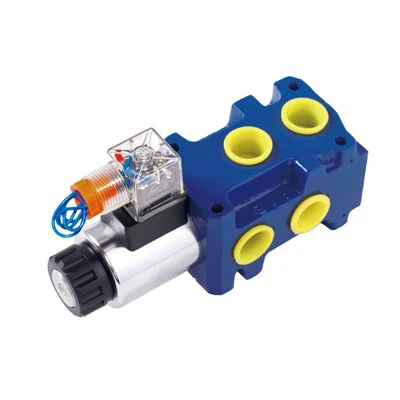
Hey there! As a supplier of Two Way Flow Control Valves, I often get asked about the flow control sensitivity of these valves. So, let's dive right into it and break down what flow control sensitivity really means for a two way flow control valve.
Understanding Flow Control Sensitivity
First off, flow control sensitivity refers to how precisely a two way flow control valve can regulate the flow rate of a fluid. It's all about the valve's ability to make small, accurate adjustments to the flow based on the input it receives. Think of it like the sensitivity of a volume knob on a stereo. A highly sensitive knob allows you to make tiny changes to the volume, while a less sensitive one might have bigger jumps between settings.
In the context of a two way flow control valve, a high - sensitivity valve can respond to very small changes in the control signal. This is crucial in applications where precise flow control is required, such as in chemical processing plants, where the exact amount of a chemical being added to a reaction is critical.
Factors Affecting Flow Control Sensitivity
There are several factors that can influence the flow control sensitivity of a two way flow control valve.
Valve Design
The design of the valve plays a huge role. For example, valves with a more complex internal structure, like those with multiple ports or special flow passages, can offer better flow control sensitivity. A well - designed valve can direct the fluid flow more precisely, allowing for finer adjustments.
Actuator Type
The actuator is what makes the valve move and control the flow. Different types of actuators have different levels of sensitivity. Electric actuators, for instance, can offer very precise control because they can be easily programmed to make small, incremental movements. On the other hand, pneumatic actuators might have a bit more of a lag and less fine - tuned control, but they are often more robust and suitable for certain industrial environments.
Fluid Properties
The properties of the fluid flowing through the valve also matter. Viscosity, density, and temperature can all affect how the valve responds. For example, a highly viscous fluid might require a different valve setting compared to a low - viscosity fluid. The valve needs to be able to adjust to these changes in fluid properties to maintain accurate flow control.
Why Flow Control Sensitivity Matters
In many industries, the ability to control the flow rate accurately is essential. Let's take a look at a few examples.
Manufacturing
In manufacturing processes, such as in the production of electronic components, precise flow control is necessary to ensure the quality of the products. A two way flow control valve with high sensitivity can help maintain a consistent flow of coolant or lubricant, which is crucial for the proper functioning of the manufacturing equipment.
Medical Applications
In the medical field, flow control sensitivity is vital. For example, in intravenous (IV) drips, a two way flow control valve needs to be able to deliver the correct amount of medication or fluid to the patient at a precise rate. A small error in flow rate could have serious consequences for the patient's health.
Our Two Way Flow Control Valves
As a supplier of Two Way Flow Control Valve, we understand the importance of flow control sensitivity. Our valves are designed with the latest technology to ensure high - precision flow control.
We offer a range of valves that can be customized to meet the specific needs of different applications. Whether you need a valve for a high - pressure system or a low - flow application, we've got you covered.


Our valves are equipped with state - of - the - art actuators that provide excellent sensitivity. The electric actuators we use can be programmed to make very small adjustments, allowing for precise control of the flow rate.
Comparing with Other Valves
It's worth comparing our two way flow control valves with other types of valves, such as Modular Restrictive Check Valve and Restrictor Valve.
While modular restrictive check valves are great for preventing backflow and providing some level of flow restriction, they might not offer the same level of flow control sensitivity as our two way flow control valves. Restrictor valves, on the other hand, are mainly used for limiting the flow rate, but they might not be as adaptable to changing flow requirements as our two way flow control valves.
How to Choose the Right Valve
When choosing a two way flow control valve, you need to consider several factors. First, think about the application. What kind of fluid will be flowing through the valve? What is the required flow rate? What level of precision is needed?
You also need to consider the operating conditions, such as pressure and temperature. Our team of experts can help you select the right valve based on your specific requirements. We can provide you with detailed information about the valve's performance and how it will work in your application.
Contact Us for Your Flow Control Needs
If you're in the market for a two way flow control valve, we'd love to hear from you. Our valves offer high - quality flow control sensitivity that can meet the demands of a wide range of applications. Whether you're in the manufacturing, medical, or any other industry, we have the right solution for you.
Don't hesitate to reach out to us to discuss your requirements. We're here to help you find the perfect valve for your needs and ensure that you get the best performance possible. Let's work together to achieve precise flow control in your systems.
References
- "Valve Handbook" by David W. Dickey
- "Fluid Mechanics for Engineers" by Frank M. White