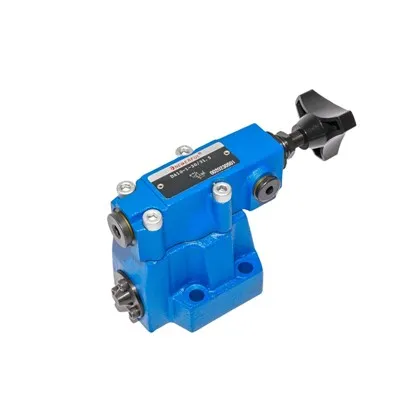
When I’m out on client calls, one question that comes up again and again for our solenoid directional valves is not just “does it perform as promised?” or “how fast can you ship it?”—it’s “how do you package this thing so it gets to my job site, my warehouse, or my production floor in one piece?”
I get it. These valves are the workhorses of hydraulic systems, used in everything from construction equipment to packaging lines, agricultural machinery to industrial automation. A single damaged valve can bring an entire line to a halt, costing thousands in downtime, missed deadlines, and repair fees. Over the years, we’ve refined our packaging process to match the unique needs of each valve series we offer, from compact, high-precision models like the GD 4WE6E61B Solenoid Valve Rexroth NG6 Replacement to high-flow workhorses like the 4WE25E High-Flow Pilot Operated Solenoid Valve. Let’s break down exactly what goes into properly packaging solenoid directional valves, so you can see why it matters for your operations.
First, we have to start with the core design of the valve itself, because packaging isn’t one-size-fits-all. Not all solenoid directional valves are the same, and their individual specs dictate the protection they need. Take our Hydraulic Solenoid Valve 4WE10 Series—these are medium-flow valves with a cast iron body, precision-machined spools, and sensitive electrical components in the solenoid coils. Compare that to the 4WE25E, which is bulkier, heavier, and built for 25mm flow paths, and you can already see why their packaging needs differ. Even something as small as the 4WE6E Hydraulic Solenoid Control Valve needs to account for tiny, easily bent pilot orifices that can clog with debris if not sealed properly.
Let’s start with the basics: physical protection. Solenoid directional valves have three main parts that are vulnerable to damage: the metal body, the internal spool, and the solenoid assembly.
The spool is the heart of the valve. It’s a precision-machined steel part with tolerances often measured in thousandths of an inch. Even a tiny scratch or burr on the spool can cause fluid leaks, inconsistent operation, or complete failure. When a valve is in transit, it can shift around inside its box, leading to the spool rubbing against the valve body’s bore. That’s why for every series, we use custom-cut, closed-cell foam inserts that are shaped to cradle the valve exactly where it needs support. For smaller valves like the GD 4WE6E61B, we use a two-piece foam insert that holds the valve between its mounting ports and solenoid ends, eliminating any movement during shipping. For larger, heavier valves like the 4WE25E, we use denser foam with extra cutouts to support the valve’s center of gravity, preventing it from tilting and putting pressure on vulnerable connection ports.
Next, we seal the ports. This is a step I can’t stress enough. Unsealed inlet and outlet ports on a hydraulic valve are an open invitation for dirt, dust, moisture, and even random debris to get inside. A single speck of dust in a hydraulic system can grind against the spool, causing wear that will shorten the valve’s life by years. For all our valves, we use threaded plastic port plugs that are tightened snugly by hand—no loose rubber plugs that can fall off during transit. We also add a thin layer of food-grade, non-toxic grease to the spool and internal bores before sealing them. This grease does two things: it prevents corrosion during storage, and it ensures the spool moves freely when the valve is first installed, so there’s no break-in delay for your team.
Then there’s the solenoid coil. These are electrical components, usually made of copper wire wrapped around a core, encased in a plastic or metal housing. They’re sensitive to impact and moisture, and if they get wet during shipping, they can short out, render the valve inoperable, or even create a safety hazard. For most of our standard valves, including the Electromagnetic WE10 Directional Valve, we wrap the solenoid in a static-shielding plastic bag first, to protect it from electrostatic discharge (which can fry the delicate internal electronics). We then add an extra layer of bubble wrap around the solenoid housing, with a notch cut out to avoid pressing directly on the electrical connector, which is prone to bending. For valves going to areas with high humidity or long transit times, like overseas shipments, we add a desiccant packet inside the bag to absorb any moisture that might get in, and we seal the bag completely with heat, not just a twist tie.
Now, we have to think about the shipping environment. Not all valves go the same place, and packaging needs to adapt to different conditions. A valve going to a local construction site on a flatbed truck will face different conditions than one going to a cold storage warehouse in a coastal city, or one being air freighted across the world.
For our domestic standard shipments, we use corrugated boxes with a double-wall liner, especially for heavier valves like the 4WE25E. Single-wall boxes might be fine for small, light parts, but a 50-pound valve bouncing around in a single-wall box during a truck ride will break through the sides in no time. We also add corner protectors made of cardboard to the box, so if it gets dropped or stacked, the corners—where most box damage happens—don’t cave in.
For international shipments, where valves might go through multiple layers of transportation: truck, ship, air, we take it a step further. We wrap the entire box in a heavy-duty plastic shrink wrap to keep rain, sea spray, and dust out. We also add a layer of cushioning air foam between the box and its pallet, so when the shipment is stacked at a port or warehouse, the weight of other boxes doesn’t crush the valve inside. We also label every box clearly with “FRAGILE” and “HYDRAULIC COMPONENTS” in both English and the local language of the destination country, so handlers know to take extra care.
One common mistake we see other suppliers make is skimping on labeling for installation. Wait—packaging includes information that matters even after the valve is opened, right? Because a valve that arrives undamaged but has a lost instruction manual, or a mismatched gasket, is still a problem for your team. That’s why every one of our valve packages includes a sealed, water-proof pouch with all the necessary documentation: the installation manual, maintenance guide, gasket and O-ring set, and a copy of the product spec sheet. For example, if you order a 4WE6E Hydraulic Solenoid Control Valve, the pouch has the exact gaskets you need for its mounting ports, so you don’t have to hunt for the right size when you’re ready to install it. We also print the valve’s serial number, model number, and flow rating directly on the box and the foam insert, so if you have to track a replacement part or file a warranty claim, you don’t have to dig through papers to find that information.
We also test our packaging, and not just in a lab. I’ve seen enough valves come back damaged to know that lab drop tests are fine, but real-world shipping is messy. We regularly send test packages with our team members to go through regular freight routes, so we can see how they hold up when handled by multiple warehouses, bounced over potholes, or stacked improperly. Last year, we noticed that some of our 4WE10 Series valves were getting damaged when stacked on top of heavier boxes, even though the box specs said it could hold 100 pounds. So we adjusted the foam insert to add a hard, plastic support bar along the bottom of the valve, and that cut damage from stacking by 90 percent. That’s the kind of on-the-ground testing you can only do if you’re actually invested in your packaging working for your customers.
Let’s also talk about environmental considerations, because more and more of our clients are asking for sustainable packaging. We’ve worked to eliminate single-use plastic wherever we can, without sacrificing protection. The foam inserts we use now are 100 percent recyclable, not the old polystyrene foam that ends up in landfills. The plastic port plugs are made from recycled HDPE, and the static-shielding bags are recyclable through specialty programs, not just thrown away. We’ve also switched from Styrofoam peanuts to biodegradable corn-based packing peanuts, which dissolve in water if they get wet, and are non-toxic. That’s small, but it matters for clients who are working to meet their own sustainability goals.
Now, who is this all for? If you’re a hydraulic system designer, a maintenance manager, a construction company owner, or anyone who relies on solenoid directional valves, this packaging process directly impacts you. When your valve arrives, you should be able to open the box, pull out a valve that’s not scratched, not clogged with dust, not stuck because the spool was damaged, and have all the parts you need to install it right away. No waiting for replacement gaskets, no having to rework a damaged valve, no downtime because a shipment was mishandled.
Our team has been supplying solenoid directional valves for over a decade, and we’ve learned that great products aren’t just about how they perform when they leave the factory—they’re about how they get to you, intact and ready to work. We’ve refined our packaging for every series we sell, from the compact GD 4WE6E61B to the high-flow 4WE25E, because we know that for your business, every minute of downtime costs money. When you order from us, you can trust that your valve will be packaged to protect it from every possible shipping risk, no matter where it’s going.
If you’re looking to upgrade your hydraulic system, replace a worn valve, or source reliable solenoid directional valves for your next project, we’re here to help. Our team can walk you through our full range of products, including the Hydraulic Solenoid Valve 4WE10 Series, the Electromagnetic WE10 Directional Valve, and more, answer any questions you have about packaging, specs, or installation, and help you find the right solution for your needs. Reach out today to connect with our sales team and start a conversation about your next valve order.


References
Hydraulic Institute. (2020). Packaging Guidelines for Hydraulic Components. Hydraulic Machinery Association.
International Organization for Standardization. (2018). ISO 14801: Hydraulic Fluid Power – Valves – General Requirements for Packaging and Shipping.
American Society of Mechanical Engineers. (2019). Recommended Practices for Packaging Precision Industrial Components. ASME B20.1.