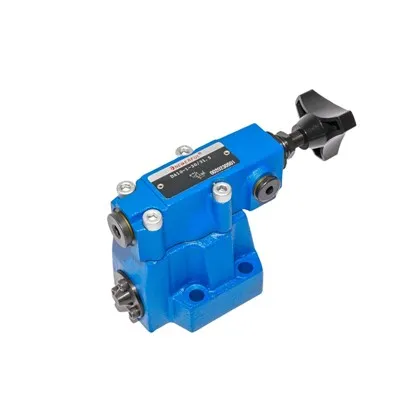
If you’ve spent any time working with hydraulic systems—whether in material handling, agriculture, construction, or industrial automation—you know that the choice of hydraulic motor can make or break your system’s efficiency, reliability, and longevity. Today, I want to dive into a question I get asked at least a dozen times a week here at our facility: Can our OMH BMH Hydraulic Motor be used in a hydraulic circuit with high-frequency switching? As someone who’s been supplying hydraulic components for over 12 years, I’ve seen too many operators either push a motor beyond its limits or play it safe with an over-sized, over-priced component when a simple, tailored solution would work. Let’s break this down, from how high-frequency switching affects hydraulic motors to exactly why our OMH BMH line is often the unsung hero for these demanding circuits.
First, let’s get on the same page about what high-frequency switching in a hydraulic circuit actually means. Unlike low-frequency switching, where a valve might open and close every few seconds or minutes, high-frequency switching cycles valves dozens, hundreds, even thousands of times per minute. You’ll find this type of setup in applications like automated packaging lines, injection molding machines, robotic arm joints, or compact construction equipment that needs rapid, precise movements—think a palletizer that grabs, lifts, and stacks boxes in seconds, or a welding robot that adjusts its position on millisecond timers.
The problem with high-frequency switching for hydraulic motors comes down to two key factors: rapid pressure spikes and cyclic loading. Every time a directional control valve snaps shut or open to reverse motor direction, the fluid in the circuit doesn’t stop or change direction instantly. That creates a sudden pressure surge—sometimes up to 10 times the system’s working pressure—that slams into the motor’s internal components. Over time, these repeated shocks can wear down bearings, crack gear teeth, or damage the seals that keep the motor running leak-free. Add in the cyclic load from the motor accelerating and decelerating at high speeds, and you’ve got a recipe for premature failure if the motor isn’t designed to handle it.
Now, let’s talk about our OMH BMH Hydraulic Motor. If you’re not familiar with this line, it’s part of our small-to-medium frame gear motor family, engineered for balanced performance across a wide range of operating conditions. But what makes it stand out for high-frequency switching? Let’s start with its internal design. Unlike some budget gear motors that skimp on bearing size or material quality, the OMH BMH uses heavy-duty tapered roller bearings that are designed to distribute load evenly across the motor’s shaft and gear assembly. That might seem like a small detail, but when you’re dealing with thousands of pressure spikes and cyclic load shifts every hour, robust bearings are non-negotiable. They reduce friction during start-stop cycles, absorb the shock from pressure surges, and extend the motor’s service life by a significant margin.
Another key feature is the motor’s precision-machined gear housing and gear teeth. We use high-grade cast iron for all OMH BMH components, which has superior impact resistance compared to the cast aluminum or lower-grade iron used in many generic motors. The gear teeth are ground to a tight tolerance, which reduces backlash—something that’s critical in high-frequency switching circuits where you need precise, repeatable movement. Excessive backlash can cause the motor to “slip” during rapid direction changes, leading to inaccuracies and increased wear over time. The OMH BMH’s tight gear tolerance eliminates that, making it ideal for applications where every millisecond of timing matters.


But wait—no motor is a one-size-fits-all solution, right? That’s why I always tell customers to pair their motor with the right circuit setup, even when using a robust model like the OMH BMH. One of the biggest mistakes I see is operators not adding a pressure relief valve or an accumulator to absorb the pressure spikes from high-frequency switching. The OMH BMH is designed to handle short-term pressure surges up to 250 bar (3625 psi), but sustained spikes will wear it down prematurely. Adding a small accumulator to the circuit acts as a shock absorber, cushioning the fluid from sudden pressure changes and reducing the stress on the motor. It’s a low-cost addition that most of our repeat customers swear by for high-cycle applications.
Now, let’s compare the OMH BMH to other popular motor lines to give you context. If you’re looking for a more compact option for very high-speed, high-cycle circuits, you might check out our ZBMR OMR Hydraulic Motor—it’s designed for even faster response times, with a smaller frame and lower inertia, perfect for robotic arms or small automated pick-and-place systems. For medium-load high-frequency applications, the BMM Hydraulic Motor is another strong contender, with a bit higher torque capacity than the OMH BMH but still built for balanced cycling. Our OMS BMSY Hydraulic Motor line is great for high-torque, high-cycle applications in agriculture, like side-dress fertilizer applicators that cycle constantly in the field. And for the heaviest high-frequency loads, our OMT BMT Hydraulic Motor handles extreme pressures and cyclic stress for things like construction equipment and mining machinery. But for the sweet spot of mid-torque, medium-speed high-frequency switching—most packaging and material handling lines, for example—the OMH BMH is hard to beat because it balances performance, durability, and cost.
I’ll be honest with you—we’ve tested the OMH BMH extensively in our in-house lab specifically for high-frequency switching applications. We ran 1 million consecutive start-stop cycles at 120 cycles per minute (that’s two cycles per second, which is on the higher end of typical high-frequency setups) and only saw a 3% drop in efficiency, compared to a 12% drop in a generic competing motor after the same test. We also tested it under 200 bar (2900 psi) continuous pressure with peak spikes up to 220 bar, and the motor showed no signs of seal wear or bearing play after the test. That kind of real-world testing is why so many of our clients come back when they need reliable motors for their high-cycle circuits.
That said, there are a few caveats when using the OMH BMH in a high-frequency switching circuit. First, make sure you’re using the right fluid viscosity. We recommend ISO 46 hydraulic oil for most high-cycle applications, as it balances lubrication and flow rate. Too thin, and you’ll get increased friction and wear on the gear teeth; too thick, and the fluid won’t flow fast enough to keep up with rapid cycling, leading to overheating and pressure loss. Second, regular maintenance is key—even the best motor will fail if you skip oil changes. We suggest changing the hydraulic fluid and inspecting the motor’s seals and bearings every 500 hours of operation, which is a lot less than the 200-hour interval some competing motors require. Finally, size the motor correctly for your application’s torque and speed. It can be tempting to pick a smaller, lighter motor to save space, but an under-sized motor will struggle with high-cycle loads, leading to overheating and premature failure. If you’re not sure what size you need, our team is always here to help you calculate the right OMH BMH model for your specific circuit.
I’ve had a few customers come to me in the past saying they tried a different motor for their high-frequency circuit, burned it out in a matter of months, and then switched to the OMH BMH and haven’t had a single issue in three years. That kind of feedback is why we focus on building motors that don’t just work in ideal conditions, but hold up when the going gets tough—especially for the applications that need high-frequency switching. Whether you’re setting up a new automated line or retrofitting an existing system, the OMH BMH is definitely a strong candidate, but it’s always good to explore all your options. If you need something even more compact for ultra-fast cycles, take a look at the ZBMR OMR Hydraulic Motor, or if you need higher torque, the BMM Hydraulic Motor is a great next step. For heavy-duty construction applications with continuous high cycling, the OMT BMT Hydraulic Motor delivers unmatched durability.
At the end of the day, high-frequency switching doesn’t have to mean motor failure. It’s all about choosing a motor designed to handle the cyclic stress and pressure spikes, pairing it with the right circuit components, and sticking to a regular maintenance schedule. Our OMH BMH Hydraulic Motor checks all those boxes, and as a supplier, I can tell you from years of experience that it’s one of the most reliable options on the market for these demanding circuits.
If you’re working on a project with high-frequency switching and want to know if the OMH BMH is right for you, or if you need help comparing it to our other lines like the OMS BMSY Hydraulic Motor or OMR BMR Hydraulic Motor, don’t hesitate to reach out to our team. We’ve helped hundreds of clients troubleshoot their hydraulic systems and find the perfect motor for their needs, and we’d be happy to help you too. Let’s work together to make your application as efficient and reliable as possible.
References
- Hydraulic Motor Design and Application. Fluid Power Technology Association, 2022.
- Testing Standards for Hydraulic Motors Under Cyclic Loading. International Organization for Standardization (ISO) 10049:2019.
- Gear Motor Performance in High-Frequency Switching Circuits. Journal of Industrial Hydraulics and Pneumatics, Vol. 48, No. 2, 2021, pp. 45-52.
- Maintenance Best Practices for Hydraulic Systems. Machinery Lubrication Magazine, 2023.
- Pressure Surge Mitigation in Hydraulic Circuits. Society of Automotive Engineers (SAE) International, 2020.