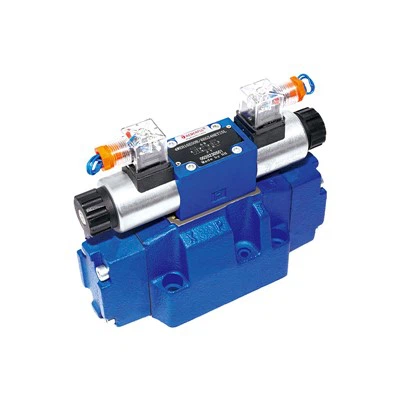
Shijiazhuang Laiye Import& Export Trading Co., Ltd. is one of the leading manufacturers and suppliers of dcv60 series — flexible sectional directional valve in China, also supports customized service. If you're going to wholesale high quality dcv60 series — flexible sectional directional valve made in China, welcome to get pricelist from our factory.

Product Overview
The DCV60 is a sectional valve. You build it one section at a time. One section, one function. Two sections, two functions. Up to twelve.
This is not a monoblock valve. It is modular. If your machine needs an extra circuit later, you add a section. No redesign. No new valve. Just bolt on another section.
The sections bolt together with tie rods running the full length of the stack. Tighten them evenly and the stack stays sealed. The design is straightforward. Each section has its own spool, its own work ports, and its own control.
Pressure rating: 35 MPa. Flow rating: 60 L/min. That covers a wide range of medium-duty mobile and industrial applications.
The body is phosphated. It passes 48 hours of salt spray without rust. If your machine works outdoors, near salt water, or in humid environments, that matters. The surface treatment is not paint-it will not chip or scratch off.
Three control options. Manual lever, pneumatic, or electro-hydraulic. Choose what fits your operator and your cab.
The DCV60 Series - Flexible Sectional Directional Valve gives you hydraulic control that grows with your machine.
What Makes It Different
Modular. One to twelve sections. Add what you need. Remove what you do not. No waste. No scrapping a whole valve because your machine changed.
Three control options. Manual lever. Pneumatic. Electro-hydraulic. Pick the one that fits your operator. Change it later if you need to.
Same body, different pilot. The hydraulic section is the same. Only the top changes. Fewer parts to stock. Simpler inventory.
Phosphated surface. Corrosion resistant. No paint to chip. Passes 48-hour salt spray.
Low leakage. 15 cc/min at 160 bar. That is tight. Oil goes to the actuator, not past the spool.
Wide viscosity range. 12 to 400 CST. Works in heat, cold, and everything in between.
Wide temperature range. -40°C to +80°C. Arctic or desert. Same valve.
Built to last. Iron castings. Precision machining. Ground spools. No shortcuts.
Specifications
| Parameter | Value |
|---|---|
| Control method | Manual / Pneumatic / Electro-hydraulic |
| Pressure medium | Mineral oil based hydraulic oil |
| Nominal flow | 60 L/min |
| Viscosity range | 12 - 400 CST |
| Operating pressure | 35 MPa |
| Internal leakage | 15 cc/min at 160 bar, 50°C |
| Ambient temperature | -40°C to +80°C |
| Valve structure | Sectional valve |
| Valve surface | Phosphating treatment |
| Valve sections | 1 - 12 sections |
For complete performance data and dimensional information, consult the DCV60 Series - Flexible Sectional Directional Valve specifications above.
Control Options
Manual. The operator moves a lever. That is it. No electricity. No wiring. No solenoids that can burn out. Good for basic machines, backup control, or places where you do not want electrical components.
Pneumatic. Air does the work. An air signal shifts the pilot spool. No wiring required. Good for hazardous areas where sparks are a concern. Pneumatic lines can run long distances without signal loss.
Electro-hydraulic. Solenoids control pilot pressure. Push a button in the cab. Good for automated systems, remote operation, or when the operator is far from the valve.
The valve sections are the same for all three. Only the pilot mechanism changes. Swap it, keep the sections. Simpler spare parts. Less to stock.
Where You Use These Valves
Mobile equipment. Excavators, loaders, cranes. Boom, bucket, swing, travel-multiple functions from one valve stack.
Industrial machinery. Presses, material handlers. The control options match your system.
Agricultural equipment. Tractors, harvesters. Sectional design grows with the machine.
Marine applications. Deck machinery, steering systems. Phosphated surface handles salt. No rust.
Forestry equipment. Log loaders, harvesters. Rugged. Handles shock loads and vibration.
Construction equipment. Backhoes, skid steers, compactors. Multiple functions, one valve.
If your machine needs multiple hydraulic functions, the DCV60 Series - Flexible Sectional Directional Valve fits. No compromises. No workarounds. Just the right number of sections for the job.
Installation
Mounting. Sections bolt together with tie rods. The tie rods run the full length of the stack. Tighten them in sequence to avoid warping the mating faces.
Ports. P for pressure from the pump. T for return to the tank. A and B for the actuator. Ports are marked on the body.
Control connection. Manual lever, pneumatic line, or electrical connector. Depends on your control method.
Orientation. Mount the valve with ports accessible. Leave room for the control mechanism-levers need clearance, pneumatic and electro-hydraulic pilots need space for lines and wiring.
Surface treatment. Phosphated. No additional coating needed.
How We Build These Valves
Casting
Iron castings arrive at our foundry. Each one is inspected. Castings with defects are rejected before they reach the machining line.
Machining
Each section goes through precision machining. Spool bores are bored to size. Ports are drilled. Mounting faces are machined flat. Everything held to tight tolerances.
Spool grinding
Spools are ground to final size. Surface finish and clearances are checked. Internal leakage depends on getting this right.
Assembly
Sections are stacked in the correct order. Tie rods are installed and tightened in sequence. Spools are inserted. End caps are fitted.
Testing
Every valve goes on the test stand. Internal leakage is checked at rated pressure. The control function is verified. If it does not pass, it does not ship.
Phosphating
The assembled valve body receives a phosphate coating. This surface treatment provides corrosion resistance. Samples are salt spray tested to 48 hours.
Packing
Small orders go into cartons. Bulk orders go into plywood cases. Test reports included on request.
Shipping
Sea, air, rail, truck. Worldwide delivery. Tracking provided.
About the Company
We started in 1988. That is over 35 years in hydraulics. Our team has more than 200 people. Some have been here for twenty years. They know the product-every detail.
We are a factory, not a middleman. We machine the parts. We assemble them. We test them. Everything under one roof. That gives us control over quality from start to finish.
We ship over 10,000 containers a year. To more than 20 countries-Russia, Europe, the Middle East, South America, Southeast Asia.
Quality
We do not sample-test. Every batch goes through at least 10 inspections. Each valve runs on its own test stand. Flow, pressure, leakage-we verify everything.
Engineering
We have real engineers on staff. Senior industry experts advise us. Our team keeps pushing the product forward.
What we offer
12-month warranty from Bill of Lading date. Support from people who know hydraulics. Shipping by sea, air, rail, truck, or express. Export packaging that protects your order.

FAQ
Q: What is the difference between the DCV60 and a monoblock directional valve?
A: A monoblock valve has a fixed number of functions. You cannot change it. The DCV60 is sectional-you add sections as needed. One section for each function. If your machine needs more functions later, you add sections. You do not replace the whole valve.
Q: What control options are available for the DCV60?
A: Three options: manual lever, pneumatic, and electro-hydraulic. Manual is simple and reliable. Pneumatic uses air pressure for remote control. Electro-hydraulic uses solenoids and electrical signals. Choose the one that fits your system.
Q: What pressure and flow ratings does the DCV60 offer?
A: Operating pressure is 35 MPa. Nominal flow is 60 L/min. These ratings make the DCV60 suitable for medium-duty mobile and industrial applications.
Q: Can I change the control method after the valve is installed?
A: Yes. The valve sections are the same. Only the pilot mechanism changes. If you start with manual control and later want electro-hydraulic, swap the pilot mechanism. Keep the valve sections.
Q: What is the surface treatment?
A: Phosphating. It protects against corrosion. The valve passes 48-hour salt spray testing. No paint to chip or scratch off.
Q: What applications is the DCV60 suitable for?
A: Mobile equipment, industrial machinery, agricultural equipment, marine applications, forestry equipment, and construction equipment. Any machine that needs multiple hydraulic functions.
Hot Tags: dcv60 series — flexible sectional directional valve, China dcv60 series — flexible sectional directional valve, manufacturers, suppliers, factory, directional control valve in hydraulic, directional control valve spool, directional flow control valve, directional spool valve, hydraulic dcv valve, hydraulic monoblock solenoid directional control valve