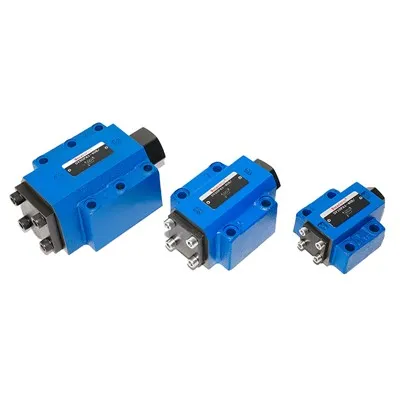
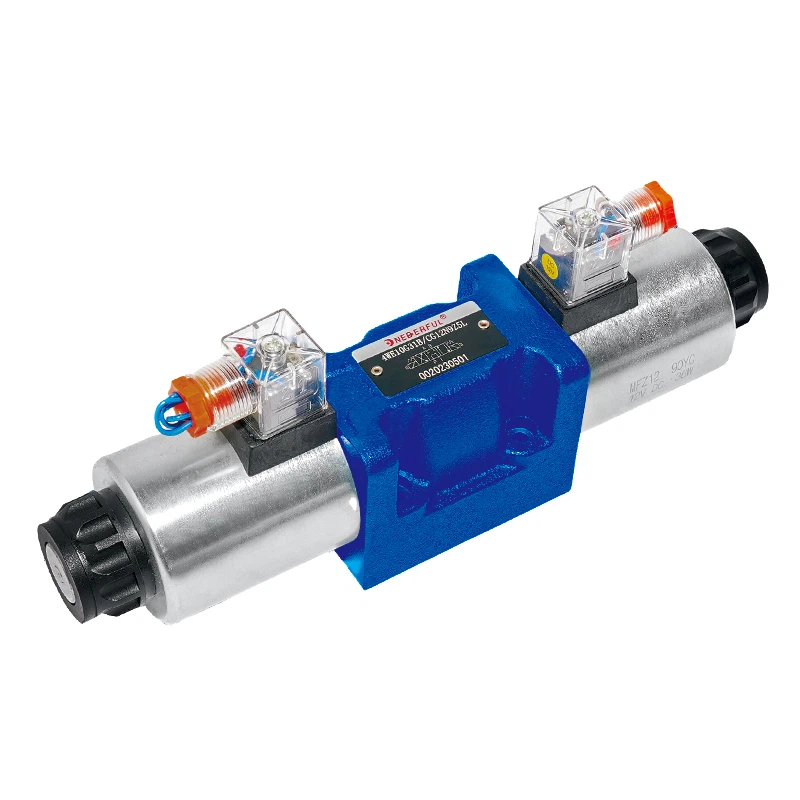
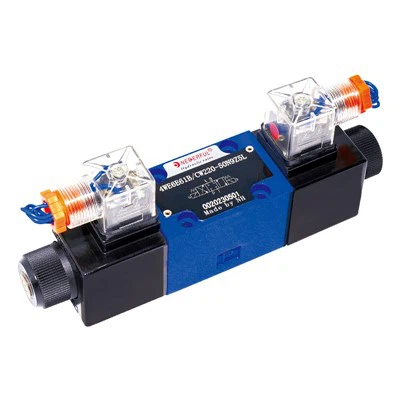
Shijiazhuang Laiye Import& Export Trading Co., Ltd. is one of the leading manufacturers and suppliers of dcv200 segmented hydraulic pressure control valve in China, also supports customized service. If you're going to wholesale high quality dcv200 segmented hydraulic pressure control valve made in China, welcome to get pricelist from our factory.
What a Sectional Valve Is & Why It Matters
You have seen a monoblock valve. One piece of cast iron with a few passages drilled through it. That works for simple machines. One function, maybe two. But when you get into big equipment-excavators, loaders, forestry machines-you need more circuits. You need auxiliaries. You need options.
That is where sectional valves come in.
Instead of one big block, you build the valve from individual slices. Each slice is one section. One section controls one function. Bolt them together with tie rods, and you have a stack. One section, two sections, up to twelve sections. The stack length depends on the machine. If the machine needs an extra circuit later, you add a section. No need to redesign the whole valve.
The DCV200 is built this way. Each section is machined separately. Then assembled into a stack.
Inside each section, there is a spool. The spool shifts to direct oil from the inlet port to one of the work ports. The spool is centered by springs when no pilot pressure is applied. When the operator moves a lever or sends a signal, pilot pressure pushes the spool. Oil flows. When the signal stops, the springs push the spool back to center. Flow stops.
The DCV200 handles 200 L/min nominal flow. Operating pressure is 350 bar. The inlet port P receives oil from the pump. The return port T sends oil back to the tank. There is also a port for the load-sensing or pressure compensation signal.
There are three ways to control it. Manual lever-the operator sits in the cab and moves a lever. Pneumatic-air pressure from a remote line shifts the pilot spool. Electro-hydraulic-solenoid valves manage the pilot pressure. The choice depends on the machine and the operator. In a cab, manual or electro-hydraulic works best. On a remote-control machine, pneumatic or electro-hydraulic is the way to go.
Each control method uses the same valve body. Only the pilot mechanism changes. That is the modularity of the DCV200.
Pressure, Leakage, and Why It Matters
The DCV200 segmented hydraulic pressure control valve runs at 350 bar continuous. That is the working pressure. Nominal flow is 200 L/min. Those are the headline numbers.
What makes it work at that pressure is the fit between the spool and the bore. The clearance is tight. How tight? Under a standard test-160 bar at 50°C-internal leakage is held to 15 cc/min per section. That is a small number. It means the oil goes where you want it to go, not past the spool.
This leakage number is useful for maintenance. If you test a section and the leakage has gone up, something has changed. Usually it is contamination wear. The spool has worn, or the bore has worn, and the clearance has opened up. That is your first warning.
The valve handles a wide range of oil viscosities. From 12 CST (thin summer oil) up to 400 CST (heavy winter oil). Ambient temperature range is -40°C to +80°C. That covers most places on earth. If it is cold enough to freeze the oil, the valve is not the limiting factor.
Build It to Fit the Machine
Each section adds 51 mm to the stack length. One section is 51 mm. Twelve sections is 612 mm. You order the valve with the number of sections you need. If the machine has six functions, you order six sections. If later you need an extra circuit, you can add a section. That is the whole point.
The sections are bolted together with tie rods. The tie rods run the full length of the stack. Tightening them is not a casual job. There is a sequence. Each tie rod gets tightened a bit at a time, in order, until all are at the specified torque. If you are repairing the valve, follow the sequence. Skip a step or over-tighten one rod, and the mating faces can warp. Warped faces leak. You cannot fix that with sealant.
Corrosion Protection
The valve body has a phosphate coating. It is not paint. It is a surface conversion. It stops rust.
We validate the coating with a salt spray test. 48 hours of salt spray, no base metal corrosion. If the valve is going to a coastal environment or an offshore platform, this matters. If it is going to a dry workshop, it matters less. But it is there either way.
The coating does not affect the sealing surfaces or the bore. Those are machined after the coating is applied. The coating is only on the outside.
Technical Data
| Parameter | Specification |
|---|---|
| Control Method | Manual, Pneumatic, Electro-hydraulic |
| Pressure Medium | Mineral oil based hydraulic oil |
| Nominal Flow | 200 L/min |
| Operating Pressure | 350 bar (35 MPa) |
| Internal Leakage | 15 cc/min at 160 bar, 50°C |
| Ambient Temperature | -40°C to +80°C (-40°F to +176°F) |
| Valve Structure | Sectional Valve |
| Valve Surface | Phosphating treating |
| Valve Sections | 1 - 12 Sections |
Performance in Varying Operating Conditions
Field operations in construction machinery
In an excavator or loader, the DCV200 segmented hydraulic pressure control valve sees daily use in controlling boom lift, bucket curl, and swing functions. When the machine is digging into hard-packed earth, the valve sections are shifting frequently. The low internal leakage (15 cc/min) means that the cylinders do not drift when the joystick is centered. This is a practical detail that operators notice; if the boom starts to droop when the lever is released, it is often a sign of wear inside the valve sections rather than the cylinder seals.
Heavy industrial applications
In industrial presses or material handling cranes, the high pressure rating of 350 bar allows the valve to support high-torque hydraulic motors. The phosphated surface is also beneficial here, as industrial environments often involve exposure to cutting fluids or cleaning chemicals that can corrode unprotected steel.
Operating in extreme temperatures
Because the viscosity range is broad (12 to 400 CST), the valve can be used in equipment that works in both Middle Eastern summer heat and Northern European winter conditions. In cold starts, the oil is thicker, and the pilot pressure might take a split second longer to shift the spool. This is normal behavior; the system will return to standard shifting speeds as the oil warms up.
Application
Tie rod torque
When the valve is shipped as a stacked assembly (1 to 12 sections), it comes pre-torqued from the factory. If you need to add or remove a section in the field, you should be cautious with the tie rods. Over-tightening can bow the valve body and cause the spools to stick; under-tightening can cause external oil seepage between the sections. We can provide the recommended torque specs for the tie rods upon request.
Port identification
Each valve section typically has an A and B work port. The diagram shows the P (pressure) and T (tank) ports located on the end sections of the stack. When you route the hoses, check that the work ports connect to the correct side of the hydraulic cylinders. If A and B are swapped, the cylinder will retract when you intend to extend it.
Pilot pressure requirements
For the pneumatic and electro-hydraulic control options, the pilot pressure must be stable and within the valve's design range. If the pilot pressure is too low, the spools will shift slowly; if it is too high, it can hammer the spool stops and cause wear over time. We recommend checking the pilot pressure gauge during installation.
Fluid cleanliness
Like any high-pressure hydraulic component, the DCV200 relies on clean oil to maintain its tight internal clearances. We recommend keeping the oil filtered to 25 microns or better. Contaminated oil will score the spools, which increases internal leakage and causes the affected functions to become sluggish.

Manufacturing Process

Casting
Raw iron castings arrive from our foundry supplier. We inspect each one for porosity and dimensional accuracy. Any casting with defects is rejected at this stage.
Machining
We bore the body passages, drill the mounting holes, and machine the sealing surfaces. The spool is ground to final size. The seat is honed to finish. Clearances are measured in microns.
Cleaning
Every part goes through our wash station. Chips and cutting fluid are removed. The parts are dried and inspected for cleanliness. Any debris left at this stage will cause sticking or wear later.
Assembly
The spool goes into the body. The spring is installed. The adjustment screw is fitted. Every fastener is torqued to spec. Seals are replaced with new ones.
Pressure Testing
Each valve is tested before it leaves the bench. We check the cracking pressure. We adjust it to the set point. We check for leakage. The test data goes into the batch record.
Painting
The valve body gets a coat of industrial paint. The mounting surfaces stay bare.
Packing
Small orders go into cartons with foam inserts. Bulk orders go into plywood cases. Test reports are included if requested.
Delivery
We ship by sea, air, railway, truck, or express. Tracking is provided for every shipment.
We do not skip steps. We do not spot-check. Every valve goes through the full routine.

FAQ
Q: What is the recommended bolt size and tightening torque for the mounting holes?
A: The valve mounts using standard metric bolts through the end sections. We generally recommend tightening the mounting bolts to the standard torque for their grade. It is most important to ensure the mounting surface is flat and rigid. If the valve is mounted on a thin, flexible bracket, the body may twist when the tie rods are tightened, causing the spools to stick.
Q: Can I repair a single section of the valve without dismantling the entire stack?
A: The sections are bolted together with tie rods that run the full length of the stack. To replace or repair one section in the middle, you have to release the tie rods and split the stack at the faulty section. This means you must remove the valve from the machine. It is a manageable job in a workshop, but it is not something that can be done while the valve is still installed.
Q: What is the best control method for a remote-controlled excavator?
A: For remote-controlled machines, we recommend the Electro-hydraulic control option. A solenoid pilot stage can be easily triggered by the radio receiver. Manual and pneumatic controls require physical lever movement or an air pressure source, which are difficult to manage on a radio-controlled machine.
Q: I hear a loud clicking sound from the valve when I operate the lever. Is this normal?
A: A clicking sound is often the spool hitting the end stops. This is normal as the spool shifts to its full open or closed position. The sound is part of the mechanical movement. However, if the clicking is accompanied by a loud hammering or knocking sound, it may indicate that the pilot pressure is too high, causing the spool to slam into the stops. In that case, check the pilot pressure relief setting.
Q: What should I do if I notice seepage at the joint between two adjacent sections?
A: Seepage between sections usually indicates that the tie rods have lost tension. Before you assume the O-rings are damaged, try re-tightening the tie rods evenly in a cross pattern to the recommended torque. If the seepage stops, the issue was simply fastener relaxation. If the seepage continues after re-torquing, you may need to disassemble the stack and replace the O-ring seals between the sections.
Hot Tags: dcv200 segmented hydraulic pressure control valve, China dcv200 segmented hydraulic pressure control valve, manufacturers, suppliers, factory, dc valve in hydraulic, direction flow control valve, hydraulic dcv valve, pilot operated directional control valve, sectional valve, solenoid controlled hydraulic valves