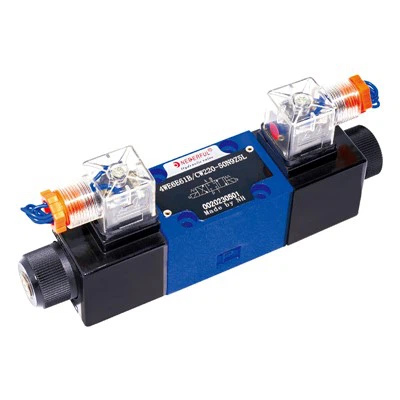
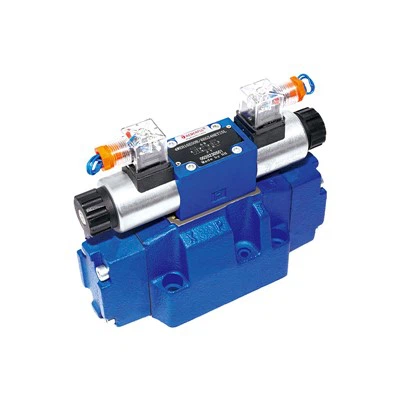
Shijiazhuang Laiye Import& Export Trading Co., Ltd. is one of the leading manufacturers and suppliers of dcv140 manual operated valve in China, also supports customized service. If you're going to wholesale high quality dcv140 manual operated valve made in China, welcome to get pricelist from our factory.
Six ways to think about this valve
When you're evaluating a manual directional valve, you're really asking a handful of practical questions. Here's how the DCV140 answers each one.
1. Does it work without power?
Yes. That's the main reason you'd choose a manual valve over a solenoid or proportional type. The DCV140 doesn't care about voltage drops, dead batteries, or faulty wiring. As long as the hydraulic pump is running and there's oil in the tank, you have control. This matters in the field, on a job site, or anywhere that a power failure would otherwise stop work.
2. Will it handle my system's pressure and flow?
The DCV140 manual operated valve covers 16 to 31.5 MPa. That's a broad band-most mobile and industrial equipment falls somewhere in that range. Flow is 10 to 160 L/min. Small cylinders, larger motors, moderate-speed actuators-if your system operates within these numbers, the valve won't be the bottleneck.
3. How do I install it-and does it fit?
Two options. Port mounting means pipes connect directly to the valve body. Compact, fewer fittings, one less place for a leak to start. Plate mounting uses a subplate. It adds a component, but it also makes valve removal easier-you can pull the valve off for service without disturbing the piping. Which one is right? Depends on your machine layout and maintenance preferences. We supply both, so you don't have to compromise.
4. Does it hold up in the conditions I work in?
Working temperature from -20°C to +80°C. Cold mornings, hot engine compartments, dusty fields, damp workshops-the seals and materials are chosen to handle the extremes that hydraulic equipment actually sees. If your operating environment sits within that range, the valve will do its job.
5. What does maintenance look like-and what wears out?
Not much, honestly. Keep the oil clean-that's the single most important thing. Contamination is what kills spool valves. The lever dust boot will eventually crack; replace it when it does. O-rings can go hard or flat over time. That's about it. The spool itself lasts a long time if the oil stays clean. Most of what you'd do is visual inspection: look for external leaks, check the lever feel, listen for anything unusual.
6. Can it serve as an emergency backup?
Yes. Many of our customers install the DCV140 alongside automated systems. If the main control loses power or the PLC faults, they can switch to manual control and keep critical functions running. It's not a replacement for automation-it's insurance against downtime.

Partner with us for cost-effective industrial solutions and flexible order options. Whether you need standard products or custom designs, our experienced team is ready to support your business growth in global markets.
Our address
Ximei Building, Zhongshan East Road, Qiaoxi District, Shijiazhuang City, Hebei Province, China
Phone Number
+86 153 7369 6977
laiye2580@gmail.com


-
Typical Specifications
Nominal pressure: 16–31.5 MPa
Nominal flow: 10–160 L/min
Operation: manual lever
Working temperature: -20°C ~ +80°C
-
Applications
Construction machinery: small excavators, loaders, forklifts
Agricultural machinery: harvesters, sprayers, seeders
Machine tools: fixture clamping, table positioning
Emergency & maintenance: manual override for automated systems
-
Usage Tips
Clean pipelines before installation to prevent contamination.
Operate with moderate force to avoid damage.
Regularly check seals for wear or leakage.
-
Compact & Flexible Installation
Small size, lightweight, and available in port and plate mounting styles to fit various equipment layouts. Easy to install, replace, and maintain.
Company background
Shijiazhuang Laiye Import & Export Trading Co., Ltd., part of Hebei Onederful® Hydraulic Technology Co., Ltd., has been manufacturing hydraulic components since 1988-over 35 years of experience. We are a factory, not a trading company, with around 200 employees and a full in-house production process covering casting, machining, assembly, testing, and phosphating.
Every valve is individually tested, not spot-checked, with test data filed against its serial number for full traceability. We export to more than 20 countries (based on our 2024 shipping records), hold ISO 9001 certification, and offer OEM customization, technical support, and a 12-month warranty. Material certificates, test reports, and certificates of origin are available upon request.
Production Process
The manufacturing process follows a standard hydraulic component production sequence. Each step is documented and traceable.
Raw Material Inspection
High-strength cast iron and alloy steel are checked for composition and mechanical properties before anything else happens.
Precision Machining
CNC equipment handles milling, drilling, grinding, and honing to hold tight tolerances on bodies, spools, and end covers. After machining, all parts go through deburring, cleaning, and dimensional verification.
Heat Treatment
Key components such as spools and valve seats undergo hardening to improve wear resistance and extend service life.
Surface Treatment
Phosphating or other rust-proof coatings are applied to protect against corrosion and improve surface durability.
Assembly
Skilled workers install spools, springs, seals, and control parts in sequence, with torque control on each connection.
Pressure Testing
Every assembled valve goes through hydraulic testing-pressure resistance, leakage detection, and functional debugging under rated working pressure.
Final Inspection
Visual inspection, dimensional confirmation, and test data review. Each valve is individually tested, not spot-checked, with test data filed against its serial number for full traceability.

Common Problem
FAQ
Q: What's the difference between the DCV140 manual operated valve and a solenoid valve?
A: The DCV140 is purely mechanical - you move the lever by hand, and the spool shifts. No electricity, no coils, no wiring. A solenoid valve needs an electrical signal to operate. If you have power available and want remote or automated control, a solenoid valve makes sense. If you want direct, manual control that doesn't depend on power, the DCV140 is the way to go.
Q: Can I use this valve with a joystick or cable control?
A: The DCV140 is designed for direct lever operation. If you need remote cable or joystick control, we offer other models with that capability. Let us know what your control setup looks like and we'll point you to the right option.
Q: Can the DCV140 be used in a closed-center hydraulic system?
A: That depends on the spool type. Some spool configurations are designed for open-center systems; others work with closed-center. Tell us your system type and we'll recommend the right spool option.
Q: What happens if the lever gets stuck?
A: Sticking usually means contamination has entered the spool bore - dirt, metal particles, or degraded seal material. Sometimes you can free it by working the lever back and forth a few times. If that doesn't help, you'll need to remove the spool, clean it, and check the bore for scoring. Clean oil prevents this.
Q: How much force does it take to move the lever?
A: Lever effort depends on the spool type and system pressure - the higher the pressure, the more force required. Typical hand lever force ranges from 40 to 120 N. It's designed to be operated with moderate hand effort, not excessive force.
Q: Can the valve be mounted in any orientation?
A: Yes. The DCV140 can be mounted in any position - horizontal, vertical, or upside down. Just make sure the lever has enough clearance to move through its full range.
Q: Do you provide test reports with each shipment?
A: Yes. Test reports are available upon request. Each valve is individually tested and the test data is filed against its serial number. We can include the report with the shipment or send it separately - just ask.


Hot Tags: dcv140 manual operated valve, China dcv140 manual operated valve, manufacturers, suppliers, factory, directional control valve in hydraulic