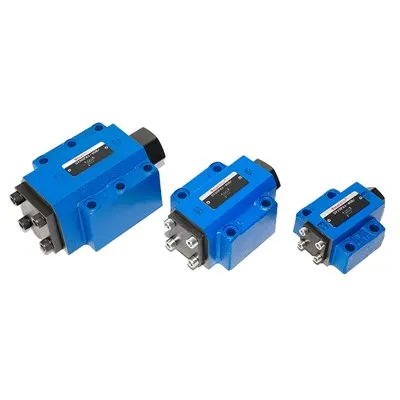
Shijiazhuang Laiye Import& Export Trading Co., Ltd. is one of the leading manufacturers and suppliers of dcv200 high-flow sectional directional control valve in China, also supports customized service. If you're going to wholesale high quality dcv200 high-flow sectional directional control valve made in China, welcome to get pricelist from our factory.

Working Principle
The DCV200 high-flow sectional directional control valve is available in manual, pneumatic, and electro-hydraulic control configurations. In the electro-hydraulic version, the valve is actuated by solenoid pilot control.
When the operator sends an electrical signal to the solenoid coil, the coil is energized. The energized coil generates a magnetic force that pulls the armature, which in turn shifts the pilot spool. The pilot spool directs hydraulic pressure to the main spool, pushing it from its neutral position.
As the main spool moves, it opens the flow path from the pressure inlet (P port) to one of the work ports (A or B). Pressurized hydraulic oil is directed to the connected actuator-a cylinder or motor-which extends, retracts, or rotates depending on which port is pressurized.
When the electrical signal is removed, the coil is de-energized. The spring returns the pilot spool to its neutral position, and the main spool is pushed back to its center by the return spring. The flow path to the work port is blocked, and the actuator stops moving.
This controlled sequence-electrical signal → coil energizing → spool shifting → oil direction switching → actuator movement-enables precise, repeatable control of hydraulic functions in mobile and industrial machinery.
What It Means to Push the Flow to 200 L/min
When you are building a large wheel loader or a 20-ton excavator, the pump is putting out more flow than you can push through a 140 L/min valve without heating the oil. At that point, the choice of valve is not about cost. It is about whether the machine can maintain its cycle time when you are running multiple functions at once.
The DCV200 is the valve you pick when you need to move 200 L/min of oil. The internal passages are sized for that flow. The pressure drop stays low, the oil stays cool, and the hydraulic functions do not slow down when the operator works the machine hard. It is not a valve for intermittent use. It is made for machines that run all day.
Most valves in this class top out at 250 bar. The DCV200 is rated at 350 bar. When you are digging in compacted soil or running a press that hits hard, the pressure spikes. A valve rated for 250 bar will handle it, but it runs closer to its limit. The DCV200 has margin. The body is ductile cast iron. It does not flex or crack under pressure spikes.
The spools and bores are matched to each other with tight clearances. In production, the spools are measured and paired with their bores individually. If a spool slides through the bore too easily, it is set aside. At 160 bar and 50°C, internal leakage stays at 15 cc/min or less. When you let go of the lever, the cylinder stays where you left it. You do not have to correct for drift.
The surface treatment is phosphating. It has passed 48 hours of neutral salt spray testing. If the valve is installed on a machine that works in a coastal area or a dusty mine, it will not corrode after a few seasons.
Installation and Maintenance
Getting the DCV200 installed right starts with the tie rods. The sections are held together by them, and they need to be tightened to the right torque. We provide a torque chart with every valve. Use a torque wrench and tighten in a cross pattern. If you overtighten, the body can distort and the spools will bind. If you undertighten, oil will find its way out between the sections. It is not a difficult step, but it is one where the torque spec matters.
The ports are labeled, but it is worth checking them twice before you pressurize the system. P is the pressure inlet, T is the return to the tank, and A and B go to the cylinder. If A and B are swapped, the cylinder will move in the opposite direction of the lever. That is the kind of mistake you only want to make once.
If you are building a long stack-eight sections or more-the valve gets heavy. Do not rely on the flange alone to support the weight. Add brackets at both ends. We have seen stacks sag over time when they were only supported in the middle, and that sag pulls the spools out of alignment. Two brackets solve the problem.
The DCV200 has tight clearances inside-0.02 mm or less. That is what keeps the leakage low, but it also means the valve does not tolerate dirty oil. We recommend 25 micron filtration. If the lever starts feeling heavy or notchy, the return filter is the first thing to check. Nine times out of ten, it is a clogged filter rather than a worn spool.
Seals are not permanent. They wear out over time. We recommend checking them around the 2,000-hour mark or every two years, whichever comes first. If you see seepage, swap them out. We keep seal kits in stock, and they are not expensive to replace. The machine will keep running without much downtime.

Advantages
The DCV200 is not a valve for machines that run occasionally. It is made for equipment that works a full shift, day after day. The 200 L/min flow rating gives you room to run the pump without creating a bottleneck. When the operator shifts a lever, the oil moves and the machine responds without hesitation.
The 350 bar pressure rating is higher than what most systems in this class require. That extra margin matters when the machine hits rock or when a press cycles at the upper end of its force range. The body is ductile cast iron. It does not flex under load.
The spools and bores are matched individually during assembly. The clearance is checked by hand. If the fit is too loose, the valve leaks internally. If it is too tight, the lever is hard to move. We do not force a fit.
The phosphating coating is not cosmetic. It has passed 48 hours of salt spray testing. If the valve is installed in a coastal area or a humid plant, it will not corrode after a few seasons.
Technical Data
| Parameter | Specification | What It Means on the Machine |
|---|---|---|
| Control Method | Manual | No electricity, no pilot air. You pull the lever, the valve shifts. |
| Pressure Medium | Mineral oil-based hydraulic fluid | Works with standard hydraulic oils. |
| Nominal Flow | 200 L/min | The valve can run at this flow all day. If your pump puts out more, pressure drop and heat buildup increase. |
| Operating Pressure | 350 bar (35 MPa) | Set your system relief below this number. |
| Internal Leakage | 15 cc/min at 160 bar, 50°C | Low enough that cylinders hold position when the lever is centered. |
| Ambient Temperature | -40°C to +80°C | The metal handles cold. The oil may not-use winter-grade fluid in freezing conditions. |
| Valve Surface | Phosphating (48h salt spray tested) | Rust protection that holds up in coastal or humid environments. |
| Valve Sections | 1 - 12 Sections | Add sections as needed. Each section adds 51 mm to the overall length. |

Where You See This Valve Installed
On larger wheel loaders and mid-size excavators, the DCV200 sits in the main hydraulic stack. It controls the boom, the arm, and the bucket. The 200 L/min flow keeps the cycle times short even when the operator is running the machine at full capacity. We see it most often on machines that run at high flow all day.
In heavy industrial presses and scrap shears, the DCV200 controls multiple cylinders from one stack. The high flow lets the ram move fast on approach and return. The pressure rating keeps the cutting force steady.
On large forklifts and container handlers, the DCV200 controls lift, tilt, and side-shift. The manual levers give the operator direct feel for the speed and position. Low leakage means you can inch the forks forward without jerking.
About Production
The DCV200 high-flow sectional directional control valve is machined, assembled, and tested in our own shop. We have been building hydraulic valves since 1988, so the people working on this valve have seen a lot of different circuit layouts, spool configurations, and installation setups over the years. When you send in a question about a specific application, you are not talking to a distributor who has to forward the question. You are talking to the people who actually set up the test benches and run the pressure checks.
We work with OEM customers who need custom spool functions, different section counts, or port threads that do not come in the standard catalog. If you send us a drawing of your existing valve or a sketch of your circuit, we can take a look at it and confirm what we can do before we start production. We do not treat these requests as exceptions. They are part of the regular workflow.
Our shop has CNC machining centers and hydraulic test benches. The castings and bar stock are sourced from domestic mills, and we check the chemistry and mechanical properties on every batch. The critical dimensions on the spools and bodies are held to ±0.01 mm. That tolerance is what keeps internal leakage low and spool movement consistent over the life of the valve.
Every assembled DCV200 is put on a hydraulic test bench before it is packed. We pressurize it to 350 bar and check the port faces and section interfaces for external leakage. We also run the levers through full travel to confirm that the spools shift all the way and return to neutral without sticking. Each unit has a test report filed by serial number, so if something comes up later, we can trace it back to when it was built.
We export to customers in Russia, Europe, the Middle East, South America, and Southeast Asia. We provide the standard export documentation-commercial invoices, packing lists, and certificates of origin-and we can do online meetings to go over installation or troubleshooting questions if needed.
When we test a DCV200 on the bench, we don't just check for leaks. We cycle the levers at full pressure and listen for any change in the shifting sound. A spool that shifts with a consistent, clean click tells us the fit is correct. A spool that makes a rough or muffled sound usually indicates that the clearance is too tight, and we pull that valve off the line before it gets packed.
When you are ready to place an order for the DCV200, there are a few details we need to get right the first time.
Number of sections
Let us know how many hydraulic functions the valve needs to control. The DCV200 can be built with 1 to 12 sections. Each section adds 51 mm to the overall length, so if you are working with a tight mounting space, we can help you confirm the final length before we produce it.
Spool function
Tell us what happens to the oil when the lever is in neutral. If the cylinder needs to stay locked in position, we select a spool that blocks the ports. If the cylinder needs to be free to move, we select a spool that connects the ports to the tank. We can also match the spool function to your circuit diagram if you send it to us.

Port threads
The DCV200 uses standard port threads for its mounting bolts and work ports. If your machine requires a different standard-SAE, NPT, or another thread type-let us know when you place the order. We can configure the valve accordingly.
Lever style
We offer standard lever handles. If your machine needs a different lever style, we can arrange that as well. Let us know your requirements when you place the order.
Once we have these details, we confirm the configuration and provide a formal quotation. For standard configurations, we typically ship within 2 to 3 weeks. Custom orders are coordinated during the quotation stage, and we agree on the timeline before production begins.
FAQ
Q: What exactly is the DCV200?
A: It is a manual sectional directional control valve rated for 200 L/min and 350 bar. You use it to send oil to different cylinders or motors on large mobile machinery.
Q: Will the 200 L/min flow make this valve run hot?
A: Usually not. The passages are sized for 200 L/min. If you run the same flow through a smaller valve, you get more heat. The DCV200 stays cool.
Q: ow do I decide between DCV140 and DCV200?
A: Look at your pump flow. If you are over 180 L/min, go with the DCV200. If you are under that, the DCV140 will do the job.
Q: If I shift multiple sections at once, how does the flow split?
A: In a parallel circuit, flow goes to the path of least resistance. A cylinder under light load gets more oil and moves faster. A cylinder under heavy load gets less and moves slower.
Q: How do I keep a long valve stack from sagging?
A: Add support brackets at both ends. A long stack gets heavy, and if you only support it at the middle, it will bow over time.
Q: Can the DCV200 be customized for OEM applications?
A: Yes. We support custom spool functions, section counts, and port threads. Send us your drawing and we can verify compatibility.
Hot Tags: dcv200 high-flow sectional directional control valve, China dcv200 high-flow sectional directional control valve, manufacturers, suppliers, factory, dc valve in hydraulic, hydraulic dcv valve, hydraulic monoblock solenoid directional control valve, pilot directional control valve, pilot operated dc valve, solenoid controlled hydraulic valves